


Full-service lawn care in 2026 costs between $100 and $410 per month for most residential properties, depending on lot size, service frequency, and which seasonal treatments are included. For a single mowing visit, most homeowners pay between $30 and $85 for a standard residential lot, with larger or more complex properties running $100 to $200 or more. When you factor in fertilization, aeration, and fall cleanup, annual spending for a fully managed lawn commonly runs $1,500 to $3,500.
At GreenPal, we've helped over 1 million homeowners connect with vetted local lawn care professionals across 250+ markets. Across all those jobs, competitive pricing consistently has a bigger impact on what homeowners actually pay than which specific services they bundle.
What Full-Service Lawn Care Includes
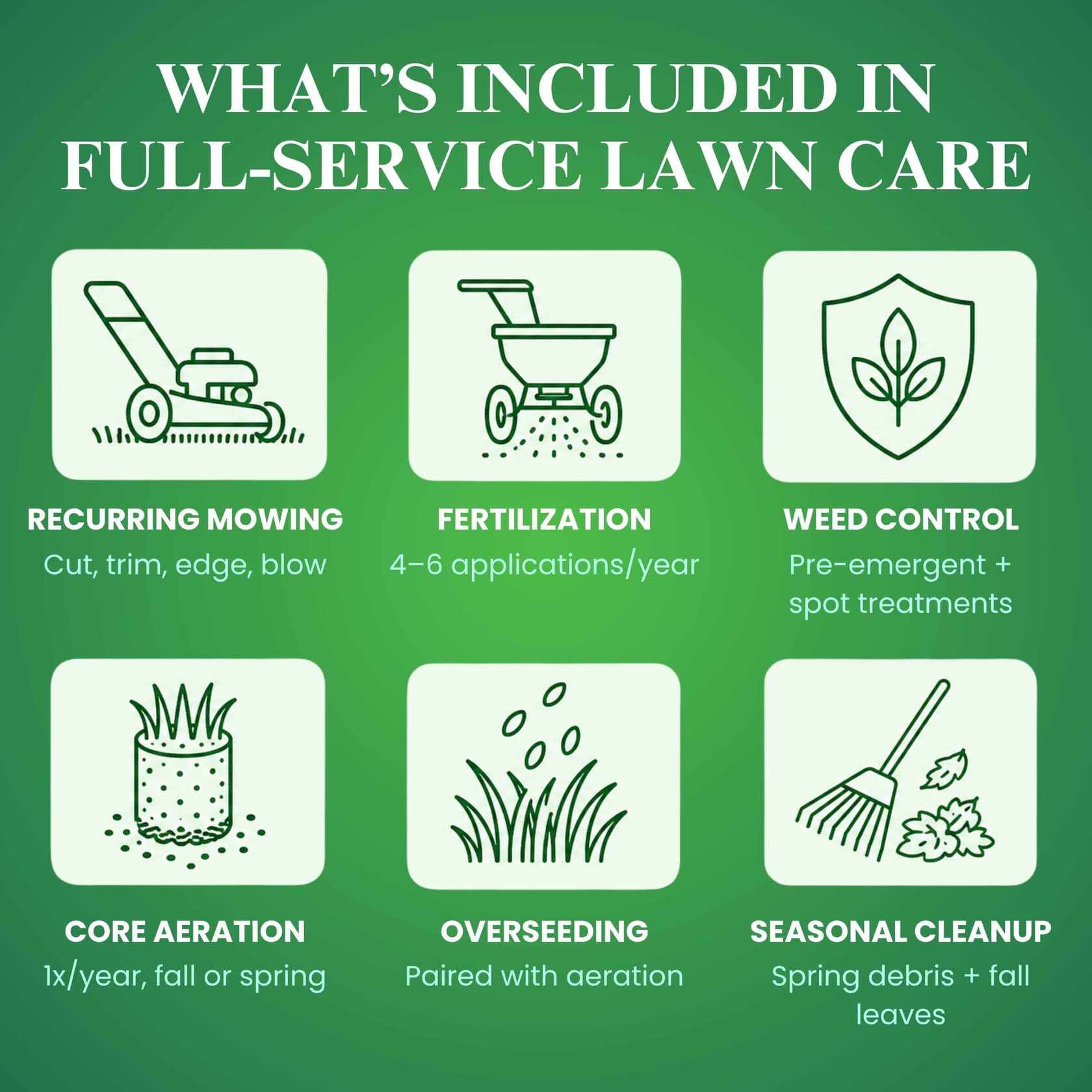
"Full-service" means different things to different companies, so it's worth knowing what you should expect. A complete maintenance program typically covers:
Recurring mowing: cutting, trimming around edges and obstacles, edging along driveways and sidewalks, and blowing clippings off hard surfaces
Fertilization: scheduled nutrient applications (usually 4 to 6 per year) to support healthy turf
Weed control: pre-emergent herbicide applications in spring and targeted spot treatments throughout the season
Core aeration: typically once per year in fall (Northern lawns) or spring (Southern lawns)
Overseeding: filling in thin areas, usually paired with aeration
Seasonal cleanups: spring debris removal and fall leaf removal
Basic lawn mowing services cover just the cutting and cleanup. Full-service adds the biological maintenance that keeps turf healthy season to season.
Mowing Costs by Property Size in 2026
Property size is the primary driver of mowing cost. Larger lots require more time, more fuel, and often commercial-grade riding equipment. Most professional operators now use flat-rate, per-visit pricing that folds in travel and equipment overhead.
Property Size |
Service Duration |
Average Cost Per Visit |
1/4 Acre |
15 to 30 minutes |
$25 to $60 |
1/2 Acre |
30 to 45 minutes |
$50 to $100 |
1 Acre |
1 to 2 hours |
$100 to $200 |
2 Acres |
2 to 4 hours |
$150 to $400 |
5 Acres |
5 to 10 hours |
$250 to $1,000 |
10 Acres |
10 to 12 hours |
$500 to $2,000 |
For properties over five acres, pricing typically shifts to an hourly or acreage-based formula, with specialized crews billing $50 to $120 per hour.
For typical suburban lots on GreenPal, most homeowners pay between $25 and $45 per mowing visit, with larger or more complex properties running $55 to $90 or more.
How Mowing Frequency Affects Your Annual Cost
Service frequency has a bigger impact on annual spending than most homeowners expect. Weekly mowing is actually the most cost-efficient option on a per-visit basis because keeping grass within the one-third rule prevents the need for slow, high-torque cutting or double passes.
Frequency |
Per-Visit Rate |
Annualized Cost |
Weekly |
$40 to $70 |
$1,800 to $2,800 |
Bi-Weekly |
$60 to $100 |
$1,500 to $2,500 |
Monthly / One-Time |
$80 to $150+ |
$1,200 to $2,000+ |
One thing to watch: bi-weekly and monthly customers often face overgrowth surcharges of $20 to $100 if grass exceeds roughly 10 inches, since heavily overgrown turf requires extra time and wears down equipment faster.
What Additional Services Cost
A full-service program bundles in several treatments beyond mowing. Here's what each one typically runs in 2026.
Fertilization
Lawn fertilization costs between $70 and $380 per application. Most homeowners on a multi-step annual program (four to six applications) spend an average of $289 per year. Costs scale with property size:
Property Size |
Cost Per Application |
5,000 sq. ft. |
$100 to $150 |
10,000 sq. ft. |
$200 to $350 |
1 Acre (43,560 sq. ft.) |
$480 to $650 |
Weed control is typically tiered between preventative chemical applications ($50 to $150 per visit for broadcast herbicide) and corrective manual labor ($35 to $105 per hour for hand-pulling).
Aeration
Core aeration averages between $100 and $200 per service for a standard residential lot. For larger properties, most professionals charge $0.03 to $0.05 per square foot. Liquid aeration (chemical surfactants) runs $80 to $150 and is less invasive, while spike aeration is cheaper ($40 to $250 for 10,000 sq. ft.) but less effective on compacted clay soils.
Our aeration and overseeding cost guide breaks down what fair pricing looks like for that service in more detail.
Dethatching (removing the layer of dead organic matter between grass and soil) runs $160 to $225 for most lawns, with severely neglected properties reaching $1,150.
Overseeding
Professional overseeding costs between $300 and $1,350 for a typical lawn, or roughly $0.09 to $0.18 per square foot. This is usually scheduled alongside aeration in fall for Northern lawns, giving new grass time to establish before the first frost.
Seasonal Leaf Removal
Fall leaf removal typically costs $300 to $600. Clearing leaves promptly matters beyond aesthetics: leaving wet piles on turf through winter encourages mold and fungal growth. See our leaf removal pricing guide for a detailed breakdown of what affects that cost.
Full-Service Lawn Care Cost Per Month
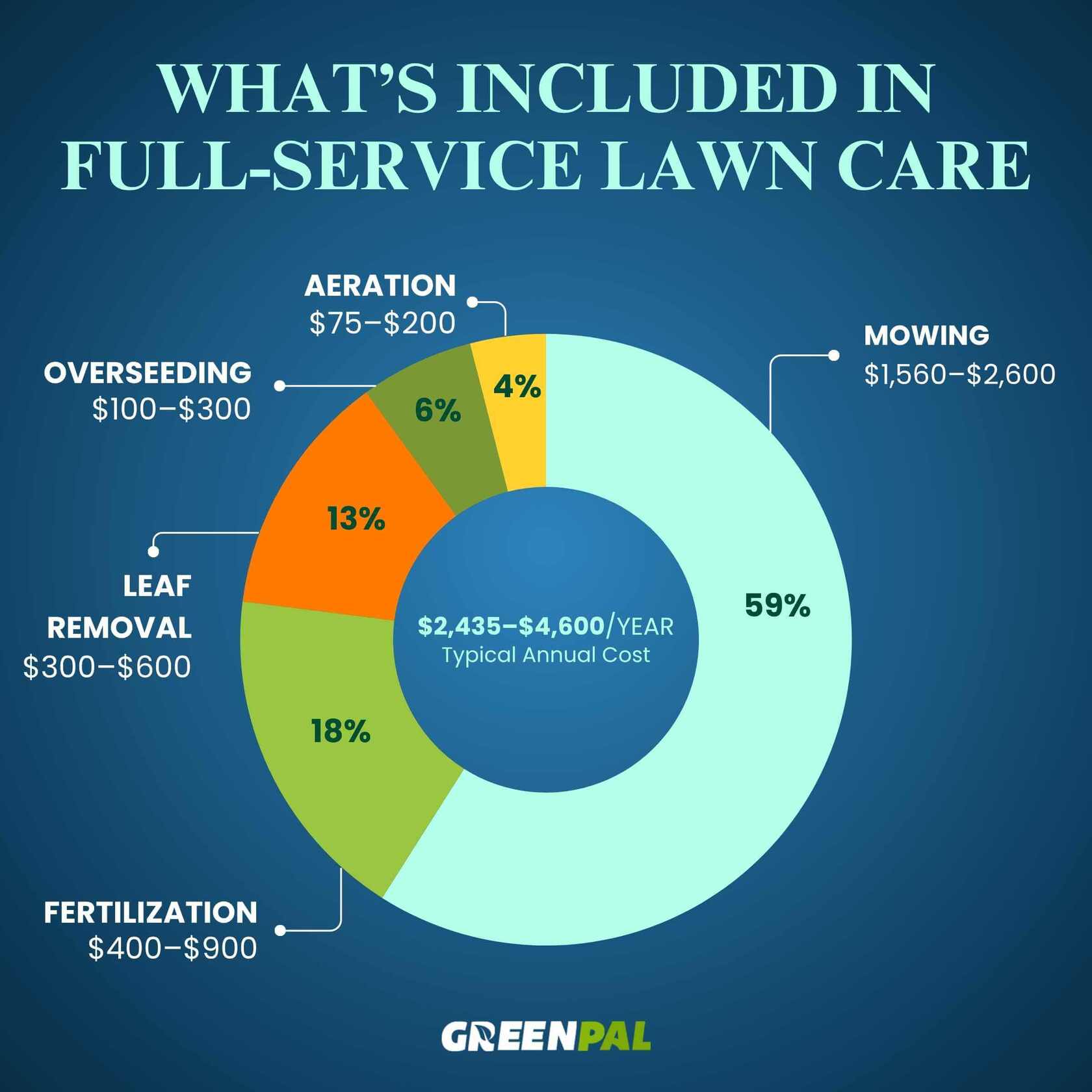
Putting it all together, a complete maintenance program in 2026 averages $100 to $410 per month. The wide range reflects lot size, frequency, and which add-on services are included.
Here's how a typical annual program breaks down for a standard suburban lot (roughly 1/4 to 1/2 acre):
Service |
Frequency |
Estimated Annual Cost |
Mowing (bi-weekly) |
~26 visits |
$1,560 to $2,600 |
Fertilization |
4 to 6 applications |
$400 to $900 |
Aeration |
1 per year |
$75 to $200 |
Overseeding |
1 per year |
$100 to $300 |
Leaf removal |
1 to 2 times |
$300 to $600 |
Total Annual |
$2,435 to $4,600 |
|
Monthly Average |
$203 to $383 |
Homeowners who opt for weekly mowing or have larger lots will land toward the high end. Those in milder climates where growth slows seasonally can reduce annual spending by adjusting mowing frequency during dormant periods.
How Location Affects Lawn Care Pricing
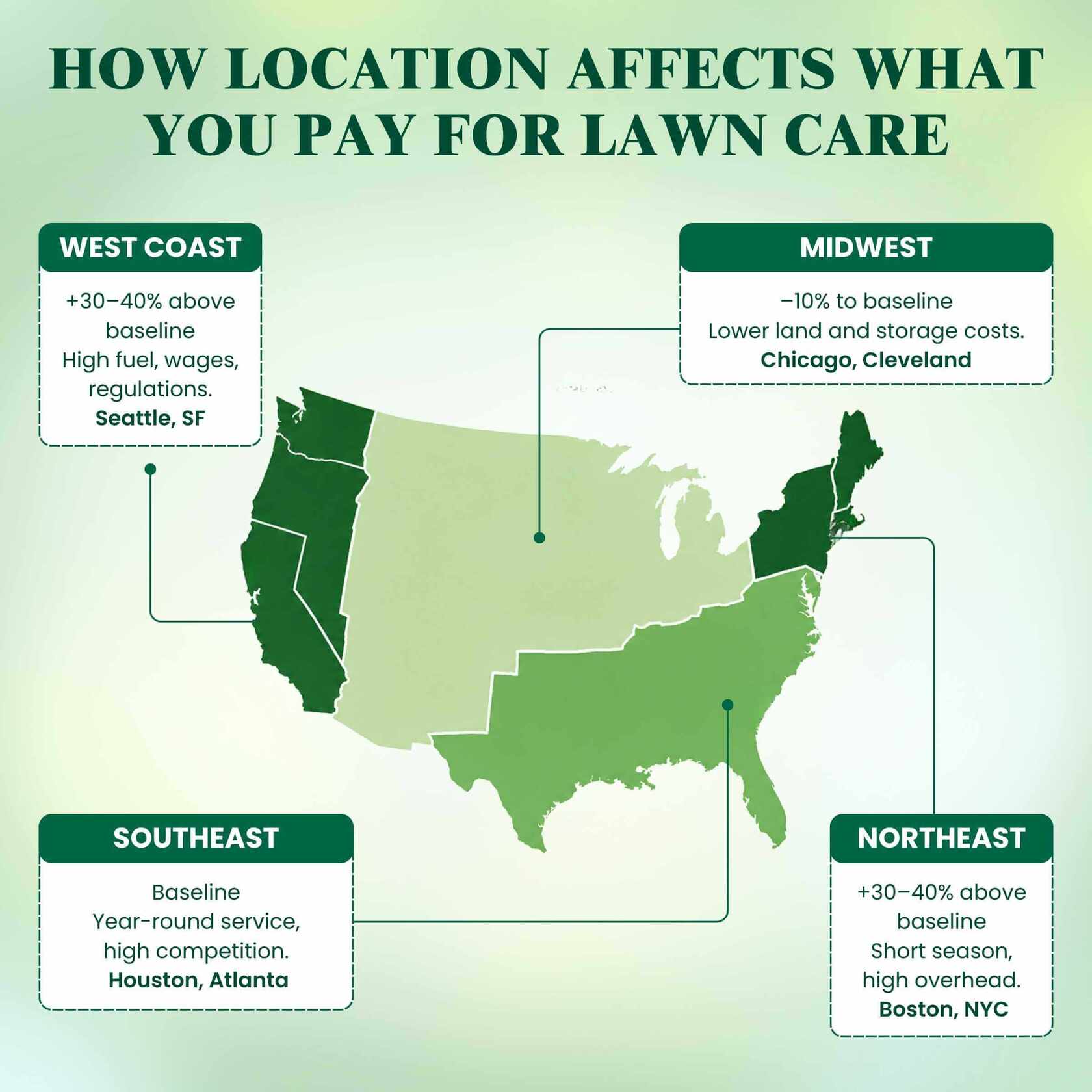
Geography is one of the strongest predictors of what you'll pay. Labor shortages, fuel costs, and year-round service demand vary significantly by region.
Region |
Price Deviation |
Primary Driver |
Northeast (Boston, NYC) |
+30% to 40% above baseline |
Condensed growing season, high overhead |
West Coast (Seattle, SF) |
+30% to 40% above baseline |
High fuel and wage rates, environmental regulations |
Southeast (Houston, Atlanta) |
Baseline |
Year-round service stability, high competition |
Midwest (Chicago, Cleveland) |
-10% to baseline |
Lower land and storage costs |
Florida and Gulf Coast properties often carry additional costs due to sandy soils that require specialized slow-release fertilizers and intensive irrigation monitoring, costs that are far less common in Midwestern markets.
What's Driving Prices Higher in 2026
Two factors are putting sustained upward pressure on lawn care costs nationally.
Labor costs. Labor inflation in the landscape industry has averaged 6.8% in recent years, with some markets reporting 16% increases since 2022. The fully loaded cost of a lawn care employee, including payroll taxes, workers' compensation, and benefits, runs 20% to 35% above their base hourly wage. An employee earning $20 per hour actually costs the company $24 to $27 before they arrive at your property. According to the National Association of Landscape Professionals, labor costs are projected to rise another 20% by 2029.
Equipment and fuel. Commercial mowers and trucks represent significant capital investment, and fuel prices above $4 per gallon in many markets continue to narrow margins for smaller operators. These costs are baked into per-visit pricing even when they aren't itemized.
Understanding these dynamics helps explain why getting multiple quotes matters. Pricing varies widely even within the same zip code, and competitive pressure is often the best tool homeowners have for keeping costs fair. Our guide on what a fair hourly rate for lawn care looks like has benchmarks worth knowing before you negotiate.
How to Get Fair Market Pricing
The most reliable way to make sure you're paying market rates is to compare multiple quotes from local providers rather than booking the first company you find.
Marketplace platforms that use competitive bidding typically drive rates 20% to 30% lower than traditional hiring methods, because providers compete for each job and can offset lower prices by saving on marketing and administrative costs.
On GreenPal, you enter your address and lawn details (our satellite imagery calculates your lot size automatically), then receive up to five competitive bids from vetted local professionals. Bids typically arrive within 15 to 30 minutes. You can compare prices alongside ratings and customer reviews before booking. There's no membership fee and no obligation if you don't like the quotes.
Every provider on our platform goes through an equipment inspection, customer reference check, in-person interview, and business credit review before they can receive jobs. Payment is only processed after the work is complete and you've confirmed it looks right.
You can view lawn care services near you to see which providers are active in your market.
Is Professional Lawn Care Worth It?
At full-service rates averaging $100 to $410 per month, the question comes up. A few data points worth considering:
Homeowners who hire out lawn care save an average of two to three hours per week during the growing season.
Buying commercial-grade equipment outright costs $500 to $3,500 upfront, not counting fuel, maintenance, and storage.
Regular professional care, particularly aeration and consistent mowing height, prevents the soil compaction and thatch buildup that require expensive corrective treatments down the line.
If DIY is still on the table, our breakdown of whether DIY lawn care is actually cost-effective walks through the real numbers.
Get Competitive Quotes for Your Lawn
Knowing the benchmarks is the first step to getting a fair deal. The next is seeing what providers in your area are actually charging for your specific property.
Visit GreenPal to get free quotes from local lawn care professionals. No membership required, no phone calls, and most homeowners have multiple bids to compare within the hour.


